This post may contain affiliate links. Please read our disclosure policy.
Preserving garlic, also called pickling garlic, is one of the easiest ways to save your garlic harvest. There’s nothing better than having fresh garlic ready to use all year long.
About ten years ago, I found myself with a huge harvest of hard neck garlic and no possible way to use it all before it began sprouting. I love garlic and cooking with garlic but even so, I knew I needed to figure out how to preserve garlic.
While I’ve canned fruits and vegetables before, I’d never thought to try preserving garlic. My brother Miles visited us last week and was kind enough to spend a couple of hours showing me how to can it.
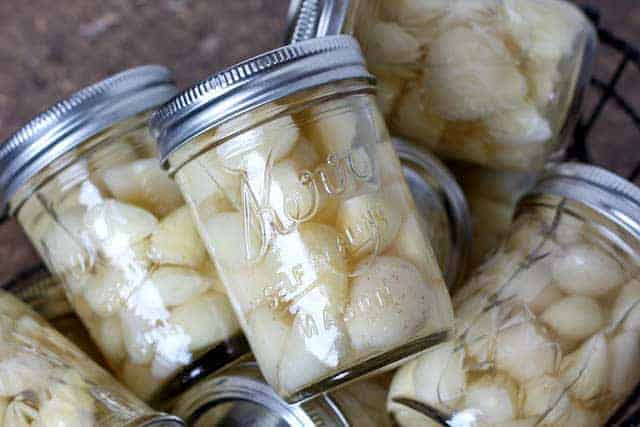
As it turns out, it is almost ridiculously simple. It’s so simple and so effective that I wish I had learned to do it a long time ago.
We all love having garlic ready to use now in the refrigerator and I’m excited to share my findings with you!
This garlic tastes FRESH. If you’ve ever bought a jar of minced garlic or peeled cloves in oil or vinegar, this doesn’t resemble any of those things. I have used the preserved cloves in a couple of recipes already and the taste is exactly the same as fresh.
How to Preserve Garlic
Raw, dried garlic can be kept for months in a cool and dark environment. However, here in the very warm southwest, it rarely lasts over a month in my home before it sprouts. Preserving it with this easy pickling method helps keep it fresh for months.
Wondering if this method yields garlic with a pickled, vinegary taste? It doesn’t. The natural oils of the garlic prevent the vinegar from being absorbed into the cloves! Handy, right?
To use your preserved garlic, just take out the number of cloves you need, rinse quickly with water, and use as desired. If you want a slight vinegar bite to the garlic, or if you are using it in a recipe that also calls for vinegar, simply use the garlic without rinsing.
Also called pickling garlic, this method is one of the most common ways to save your garlic harvest. At any given time, you’re likely to find a row of jarred garlic tucked in the back of my refrigerator.
Why Does Garlic Turn Blue
Updated 9/19/12 to answer multiple questions regarding, Why Did My Garlic Turn Blue? If your garlic does turn blue, it is still safe to eat.
This can happen when enzymes and amino acids present in garlic react with the sulfur compounds responsible for garlic’s pungent smell. I’ve seen this happen a few times over the years and apparently, it is fairly common.
Selecting Garlic
If you don’t grow and harvest your own garlic in a home garden, follow these tips for selecting the best and freshest heads of garlic from your farmer’s market or grocery store to use in your preserved garlic recipe:
First, look for heads of garlic without sprouting. Sprouting is an immediate indicator that the garlic is no longer fresh and not worth your money.
Next, give the garlic a quick “sniff and squeeze.” If it smells mildewy or moldy, give it a pass. That’s an almost sure indicator that the garlic has gone rotten.
Fresh garlic cloves should never be soft or squishy. A fresh head of garlic will be firm to the touch and not yield with a light squeeze.
How to Peel Garlic
Arguably the most time-consuming part of the process of preserving garlic is peeling it. Of course, you can just use your fingers and peel away but if you’re looking for a faster process, or run into a stubborn clove whose skin just won’t peel, here are a few popular tricks.
I’ve tried all of these methods and it really just depends on how much garlic you need to peel, how you plan to use it, or if you’re preserving it.
The method below requires just Two Metal Mixing Bowls and it is my favorite.
- Take your whole head of garlic and place it in a large metal bowl.
- Place another bowl the same size on top of the first bowl so that you have an orb shape.
- Shake the two bowls very hard for about 30 seconds.
Keep in mind that this method works best with older garlic where the skin is already a little loose. Vigorously shaking the garlic in the bowls allows the skins to just break and fall away from the cloves. This method works best when using large quantities of garlic to smash into each other and help the process along.
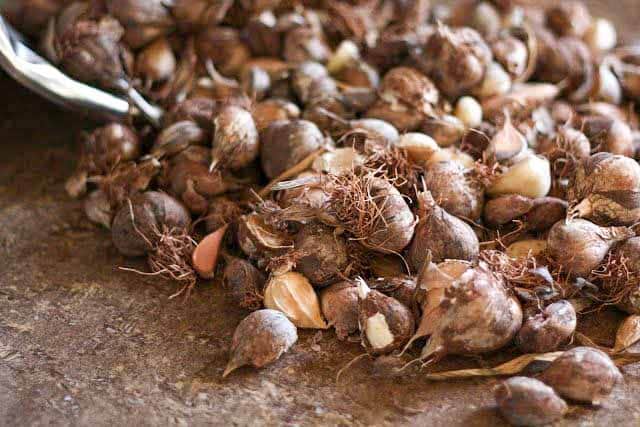
Likely the most well-known method of peeling garlic cloves in a flash is by hitting the clove with the flat side of the knife. This is handy when cooking, but for this recipe, we want to preserve whole cloves intact so be careful not to smash your garlic if you try this method.
Similar to the bowl method above, you can also place the garlic cloves in a glass jar with a closed lid and then vigorously shake to loosen the garlic skin. This is definitely effective but, the amount of garlic you’re able to process this way is limited.
You can also use the microwave or warm water to heat the garlic slightly, making it easier to peel with your fingers.
Preparing Garlic
Depending on when your garlic was harvested you might notice some brown spots on the cloves. This is perfectly normal and doesn’t mean your garlic is rotten.
After rinsing once, I used a small paring knife to trim off brown spots on my garlic cloves. After all the brown spots are removed, rinse the garlic bulbs a second time and proceed with the recipe as directed.
Storing Garlic
If you use the method outlined in the recipe, you’ll need to store your jars of preserved garlic in the refrigerator to make them last. Designate one side of a shelf or a shelf on the inside of a drawer for your garlic jars. They should stay fresh for several months and even up to a year.
Sticking with this basic refrigerator canning method is by far the easiest and more reliable way to preserve garlic.
While there are multiple sources online that claim pressure canning works, I’ve removed this information, based on a reader review that doing this destroyed her garlic. I stick with my recommendation of preserving garlic in vinegar in the refrigerator. According to the USDA, “Canning of garlic is not recommended. Garlic is a low-acid vegetable that requires a pressure canner to be properly processed. Garlic loses most of its flavor when heated in this way. For this reason, adequate processing times have not been determined for canning garlic.”
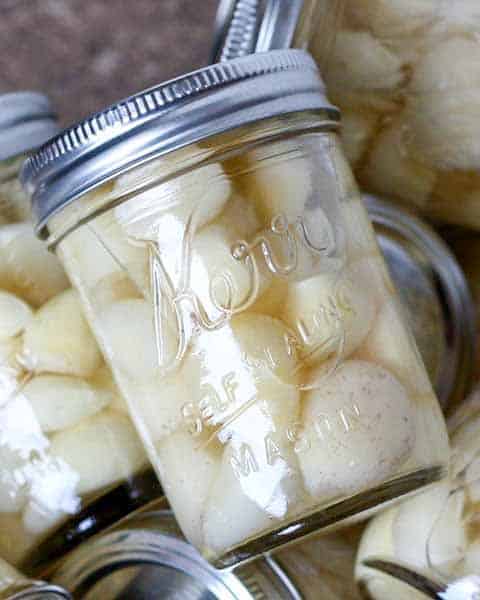
How to Use Preserved Garlic
Now that you know how to preserve garlic, you can use that garlic anywhere you’d use the fresh stuff. And believe me when I tell you it maintains all the same aromatic, flavorful goodness of a freshly harvested garlic bulb.
Preserved garlic (rinsed and patted dry) is also amazing roasted! Use it in Roasted Garlic and Bacon Guacamole and be everyone’s new best friend.
I also love garlic as an ingredient in salad dressing, sauces, marinades and savory spreads. It’s just divine in Beer and Garlic Marinade, Mojo Marinade, and in Homemade Ranch Dressing. This Chipotle Garlic Sauce served with roasted fingerling potatoes are a garlic lovers’ dream.
True garlic fanatics NEED to try the Garlic Lover’s Potato Salad. That recipe alone is worth “putting up” a big batch of garlic so you have it on hand anytime a craving strikes.
Give preserving your own garlic a try. I guarantee you won’t be sorry! It’s an easy and money-saving way to ensure you always have garlic on-hand anytime you need it.
Kitchen Tip: I use this pot and these jars when preserving garlic.

Kitchen Tip: How To Preserve Garlic

Ingredients
- Garlic heads broken apart and cloves peeled
- Distilled vinegar
- Large pot for boiling the vinegar
- Jars for storing the garlic
Instructions
- Break apart your heads of garlic and peel the cloves. Place the peeled cloves of garlic in a large mixing bowl and fill with water. Use your fingertips to scrub any dirt off of the cloves. Once the cloves are cleaned, transfer them to a large strainer and rinse well.
- Depending on when your garlic was harvested, you might have very few brown spots on the cloves. My garlic was harvested late this year, so the ends were quite brown with some spots on the cloves as well. Use a small paring knife to trim the spots and then transfer the cleaned and trimmed cloves back to the strainer. Rinse again.
- Bring the vinegar to a boil in a large pot. For several hundred cloves of garlic, I used about 8 cups of vinegar. Place the clean garlic cloves into small jars. (I prefer to use small vs large jars to avoid contaminating a huge amount if the jar is open for too long in the refrigerator.) I filled 10 half pint jars with garlic. Once the vinegar has boiled, pour it over the garlic and screw the lids on tight.
- Let the jars come to room temperature on the counter overnight and then store in the refrigerator. This will keep in the refrigerator for up to a year. Enjoy!
Nutrition
Nutrition information is automatically calculated, so should only be used as an approximation.

{originally posted 9/14/12 – recipe notes and photos updated 5/10/22}





Question–Since you are adding vinegar to this recipe it will raise the acidity. Would this make it possible to water bath the garlicinstead of pressure canning?
I honestly don’t know, Lisa. I have always stored the garlic in the fridge. According to the USDA, “Canning of garlic is not recommended. Garlic is a low-acid vegetable that requires a pressure canner to be properly processed. Garlic loses most of its flavor when heated in this way. For this reason, adequate processing times have not been determined for canning garlic.” Personally, I’ve never found it worth the risk of wasting all the garlic if it doesn’t work out well.
Is it necessary to use boiling water over the cloves. I just bottled some in room temp while vinegar then refrigerated then, per a different suggestion. They were expected to last a year also. Thanks.
I used to heat the vinegar, Barbara and I no longer do that. It will be fine.
Mary, based on your response that you used to heat the vinegar but no longer do that — I want to confirm. Your recipe above states to bring vinegar to a boil. Is this no longer necessary? Also, what type of vinegar do you use? And, one last question, do you used cured garlic or freshly harvested garlic to pickle. Thank you!
Hi, Dale! It’s not necessary to boil the vinegar first; I typically just use room-temperature white vinegar. As for the garlic, I don’t have a preference. Whatever I have on hand works well. Enjoy!
Can you use freshly harvested garlic or does it need to be cured first before pickling?
I preserve it straight out of the garden when it’s harvested, Anna.
What kind of vinegar? White I am presuming?
Hi, Carol! Unless a recipe says otherwise, usually “distilled vinegar” refers to white vinegar. I hope you enjoy the garlic.
Can you herbs (fresh or dried)?
Hello! You could try preserving herbs with the garlic (I personally haven’t tried it); if you decide to give it a go, I would recommend using the herbs sparingly. Those flavors will get strong over time. Enjoy, and happy canning!
After opening the preserved garlic, how long will it be good? In other words, if I open a jar in February, how long can I keep that jar and the garlic will still be good?
It’s good for months, Mark. The jars are sealed for canning and you’ll store them in the fridge. The vinegar preserves the garlic well.
I’ve heard fermenting garlic in a 5% salt/water brine is the best way to keep them long term, but haven’t tried it (or even heard of this method you use).
Have you tried fermenting garlic?
Also… I’m assuming regular and elephant garlic would be the same no matter the method.
Thanks in advance!
I’ve never fermented garlic that way, Russell. Yes, you can use any type of garlic with this preservation method.
Can you freeze garlic cloves?
I’ve purchased frozen garlic from the grocery store, Betty. However, I’ve never tried freezing my own. I’m guessing it will work, but I’m not sure if it would be best to mince it first or not. It’s worth trying with just a few cloves though!
Yes, I freeze peeled, fresh garlic gloves all the time.
I always add 3-4 whole garlic cloves to my canned dill pickle recipes. After a water bath of 15-20 mins my jars of pickles are complete and ready to storing for winter. The garlic cloves remain in the jars with my pickles until they are opened and enjoyed. My question is:
If this is safe for garlic using the vinegar brine for pickles, then why can’t we process just the peeled whole cloves of garlic using the dill pickle recipe ? Typically your pickles are not high in acid for canning without the vinegar brine.
Just curious … Thanks.
The reason why the “pickled” garlic is safe and shelf stable is because it has been processed, either in pressure or water. It doesn’t have anything to do with the brine recipe itself. In my experience, processing garlic (or heating it in any way) mellows it a good bit. My goal with preserving garlic using the method described here is to keep it as close to fresh tasting as possible for cooking purposes. I hope that helps!
(All of this said with the disclaimer that I am in no way an expert. This is my personal experience.)
I peel my garlic, cover them with olive oil and out them on a cookie sheet in the freezer. Once frozen, I dump them in large plastic bags. Because of the olive oil, they do not stick together in the bags. I just pull out however many I want. They last for years in this manner and do not lose their potency.
Great tip, Dania! I always like to learn about people’s different kitchen tricks.
Will garlic preserved in lemon juice keep as well as in vinegar?
Hi, Lelia! I’ve heard of lemon pickled garlic before, but I’ve never tried making it, so I’m not really in a position to give advice about that.
Within hours my garlic started turning blue. This isn’t mentioned in the instructions. According to some posts, garlic preserved in acidic liquid, like vinegar, turns the garlic blue. According to these posts it doesn’t mean the garlic is bad – but it sure looks like it is.
As mentioned above: If your garlic does turn blue, it is still safe to eat.This can happen when enzymes and amino acids present in garlic react with the sulfur compounds responsible for garlic’s pungent smell. I’ve seen this happen a few times over the years and apparently, it is fairly common.
Question. I have a ton of elephant garlic. Can the cloves be cut in half/quartered in this method? The individual cloves of the elephant garlic are too large to jar intact–that is, if I want to put more than 4 or 5 cloves in each small jar!
Hi, Marie! You should be able to slice the cloves to make more fit; as long as the cloves aren’t so tightly packed that the vinegar can’t cover them, it shouldn’t be an issue.
We have been doing this for a few years always been good. I had a couple jars happen to freeze in the frig will it loose flavor or do anything to it.
I think the will be fine. I’ve bought frozen garlic cubes before and they worked fine. You’ll just have to try using it and see. I’m glad you like the garlic, Teresa!
Excellent information. Been growing garlic for a few years, always wanting to read about growing and preserving. Thank you for your sharing.
You are welcome, Bob. It’s a great skill to have/know about.
A complete and easy to follow setrof directions l am eager to try this method. As l am one person only , l need to store garlic for use. Thanks for helping me, I will also add that the question and answer section was really enlightening.
You are welcome, Mary. I’m glad you’ve found the recipe and the Q&A to be so helpful.
Hello, I have a question. In the comments you said you no longer heat the vinegar but in a response to Mark in July, 2023, you also refer to the jars “being sealed for canning” and I’m a bit lost. I appreciate your willingness to answer questions. I made the mistake of ordering garlic from Costco, two pounds of garlic is a LOT of garlic, lol.
oh, I understand that Costco situation well. I’ve done that myself! Yes, you are correct that I do not heat the vinegar any longer. I also do not “seal” the jars for canning. I simply store them in the fridge. The entire Costco bag will break down into just a few jars. Enjoy the garlic!
Hi Mary
Why would canned garlic start to go soft in the middle? I had used another recipe where half vinegar/half water/pickling salt. Is it going bad or some will go soft?
Thank you
Honestly, I’ve never noticed that happening, Leslie. Typically, when garlic gets very soft it’s no longer good.
Can you mince garlic when doing this process or is it better to leave whole?
Do you have a recipe for how to refrigerate can minced garlic ?
Thank you
Suzi Blomgren
I’ve frozen a bit of minced garlic before, but never in bulk. I’ve never stored freshly minced garlic in the fridge. I’m not sure how long it would last or how much of the vinegar it might absorb too. I just leave the cloves whole and mince them as needed for cooking.
This works great!
I’m glad you’re enjoying the garlic, Bren.