This post may contain affiliate links. Please read our disclosure policy.
Do you know how to make Pierogi? Buttery, crisp Polish Pierogies stuffed with potatoes, cheese, and sauerkraut are a holiday favorite from the very first bite for everyone who tries them.
There are a lot of steps to this Pierogi recipe but don’t let that intimidate you. Anyone can make these! I recommend diving in and making a big batch at one time, so you can freeze some for later.
It’s also a ton of fun to turn Pierogi making into a big event. Grab friends and family and spend an afternoon rolling, stuffing and cooking these delicious dumplings together.
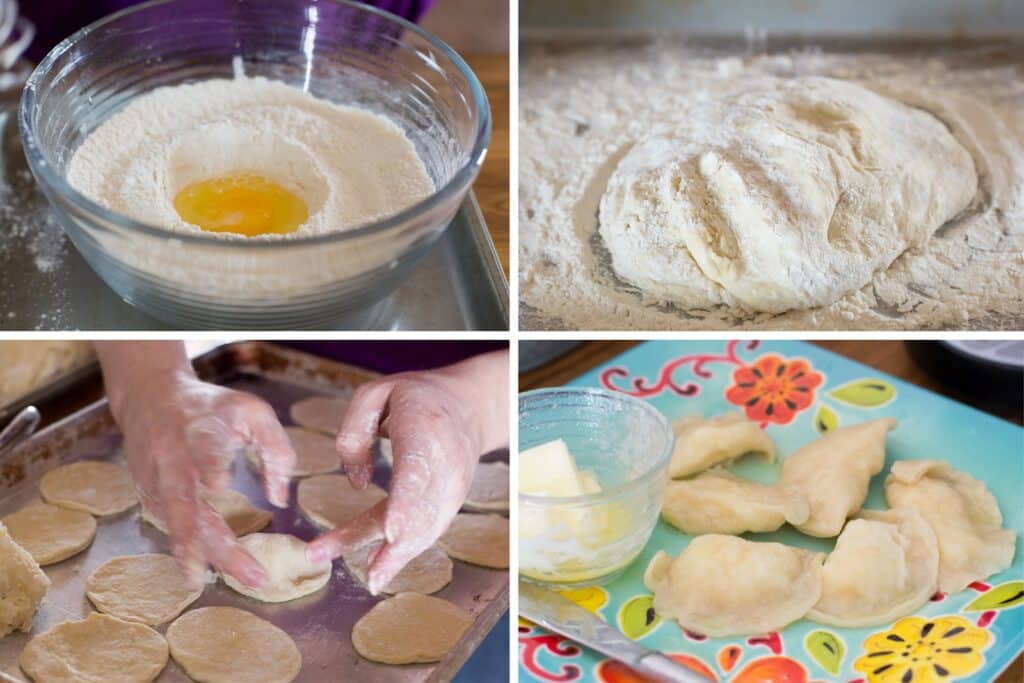
My sister Jenny taught me how to make Polish pierogies years ago; the same way that her Mother-In-Law Jane taught her to make them. Last time we were together for Christmas, we made a double batch of these pierogies and our small crowd ate almost all of them!
Side note: Did you know that the plural for pierogi can be pierogies OR just pierogi? I clarified that with Jane before sharing this recipe for the first time five years ago. And Webster dictionary has confirmed it once again. (Perogies is another spelling I often see, but that one is not in the dictionary.)
Despite the over-explanation here, I know that many of you will still email me to tell me that there is only one way to spell pierogi and I am doing it wrong. All in a day’s work, my friends. I can’t win them all.
What is a Pierogi?
Pierogies are a dough dumpling traditionally stuffed with potatoes, cheese, and/or sauerkraut. First boiled and then fried in butter, these little potato-filled pockets are irresistible.
I’m including our family’s favorite combination of potato, cheese, and sauerkraut in the recipe below. We serve these pierogies with Polish Kapusta and everyone loves the combination.
I’m told that while Jane was growing up, it was common to ask your guests ahead of time whether they preferred potato/cheese or sauerkraut/cheese pierogies. Many people are very particular about their pierogi fillings!
I discovered this for myself when I asked how you all like your pierogies! There are countless other filling options: meats, fruits, vegetables, the combinations are endless.
How To Make Pierogi
Making homemade Pierogi starts with a great filling. Simmer peeled, cut potatoes in a pot of water for 15 minutes until fork tender. Mash the cooked potatoes, then stick them in the fridge to cool completely.
While the potatoes cool, saute the chopped onion in a little olive oil until softened. Add the onion and oil to the cooled potatoes along with the sauerkraut and cheeses.
We learned how to make pierogies with Farmer’s cheese, a pot cheese that comes in a container and is very soft. If you can not locate farmer’s cheese in your market, you can substitute 2 ounces shredded Monterrey jack and 2 ounces ricotta cheese.
Store the filling in the refrigerator until your dough is ready.
Tip: To save time on the day you’re making and serving your pierogies, make the filling a day or two in advance then keep it sealed tight in the fridge until ready to use.
We find it easiest to rotate in batches of six to manage the process most efficiently. 6 waiting, 6 boiling, 6 cooling, 6 frying, repeat. It sounds a little overwhelming initially, but once you have a little assembly line set up, it goes fairly smoothly. We fill 18 pierogies before starting the first batch boiling and then just keep rotating through the stages.
This is a half recipe and it can easily be multiplied for a crowd. We’ve found that this amount is much more manageable, especially for the first few times we made these.
Pierogi Dough
Pierogi dough is a simple mixture of flour, egg, water and just a touch of salt, not unlike homemade fresh pasta.
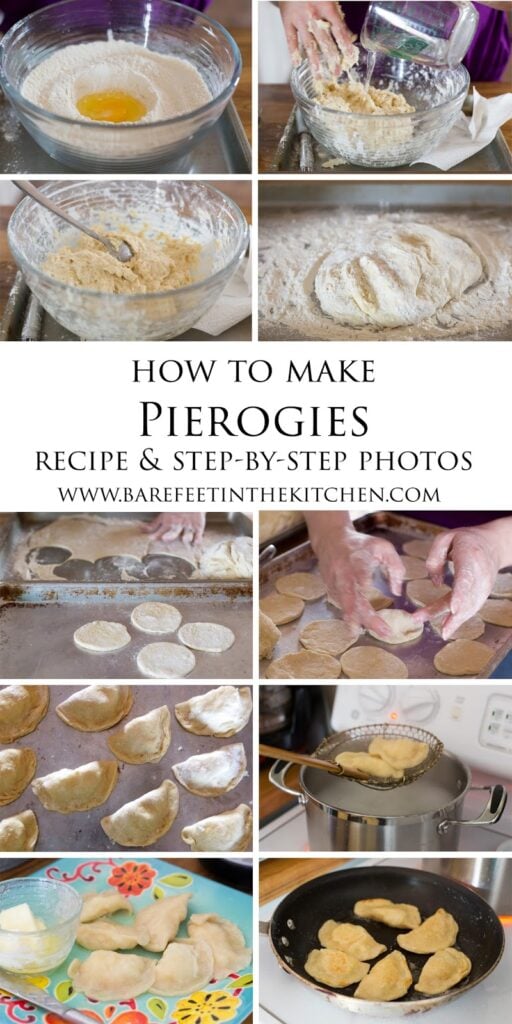
After mixing together the flour and salt, crack an egg into the center of the bowl and combine with the flour mixture. Gradually add hot water to the bowl until your dough is soft and slightly sticky.
If the dough appears too wet, add more flour a tablespoon at a time. Likewise, if the dough is too crumbly and dry, add more hot water a little at a time.
Chill the dough in the refrigerator for an hour or so until cool and firm.
Pierogi Recipe
- Here comes the fun part. You get to roll out the dough, shape and stuff your pierogies, then give them a bath in boiling hot water.
- Start the water boiling on the stove while you get all your ingredients out of the fridge and ready. Make sure to have a counter space or table cleaned and cleared so you can put the pierogies together without interruption.
- First, divide the dough into four sections. Roll the first section out until it’s very thin, about 1/8 inch in thickness. Cut this section into circles, then place a tablespoon of the potato filling on each side.
- Fold the circles over and pinch the edges to seal. Repeat this with the other sections of the dough and then place your prepared pierogies in a single layer on a plate or pan.
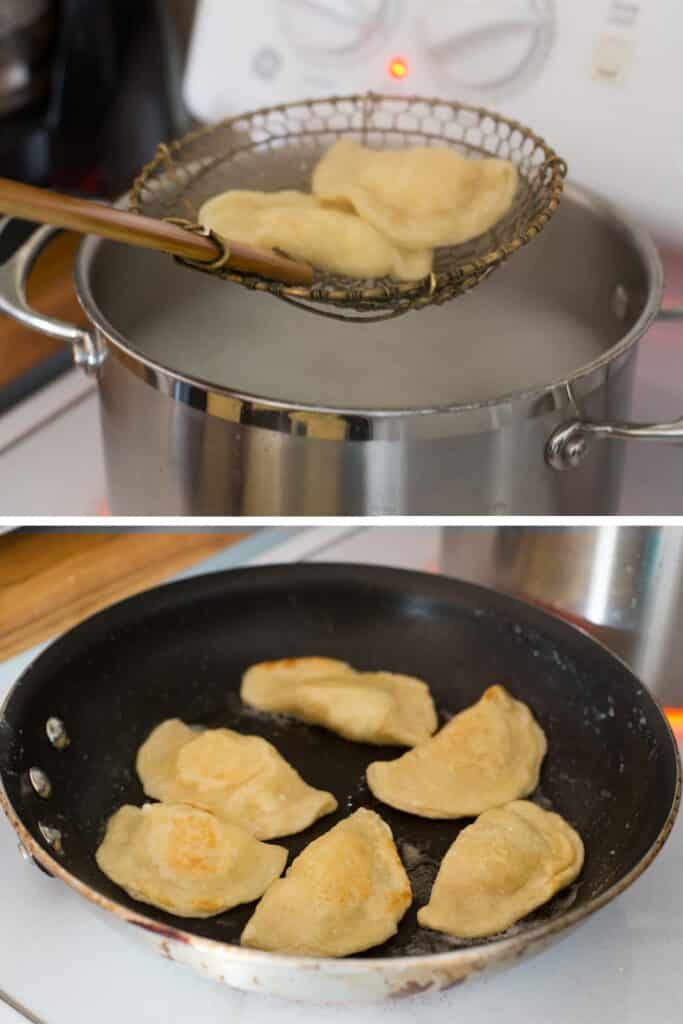
- Plop the dumplings a few at a time into the boiling water. If they stick to the bottom of the pot, give them a quick nudge with a spoon or spatula. When the pierogies rise to the top, scoop them out with a slotted spoon and place them on a buttered plate to cool for a few minutes.
- Once slightly cooled, it’s time to fry your waiting pierogies in butter. Fry a few at a time until the edges are brown and crisp.
Pierogi Making Tips
If you have a team of folks working in the kitchen, you can set up an assembly line to make finishing these steps quicker and easier. Have someone assembling the dumplings, someone boiling, and someone frying.
We find it easiest to rotate in batches of six to manage the process most efficiently. 6 waiting, 6 boiling, 6 cooling, 6 frying, repeat.
We fill 18 pierogies before starting the first batch boiling and then just keep rotating through the stages. The recipe below has been halved from Jane’s original recipe and it can easily be multiplied for a crowd. We’ve found that this amount is much more manageable, especially for the first few times we made these.
You’ll be ready to sit down to a delicious, buttery plate full of Polish Pierogies in no time. These are satisfying enough all on their own as a snack, appetizer or even a meal.
Pierogies pair especially well with cabbage dishes like this Cabbage and Sausage Skillet, Layered Cabbage Rolls, White Beans and Cabbage, or this Spicy Cabbage.
This recipe includes my family’s standard filling of potato, sauerkraut, and cheese but you can use this same recipe as a guideline for cooking Pierogies with any kind of filling you like.
Leftover pierogies freeze like a charm, too! Place them on a single layer on a cookie sheet until just frozen (an hour or two) before sealing them in airtight containers and storing in the freezer.
Kitchen Tip: I use this pot, this pan, and this spider to make this recipe.

Polish Pierogi Recipe: Step-By-Step Recipe with Photographs

Ingredients
FILLING INGREDIENTS
- 4 medium size potatoes any variety will work, peeled and cut into 1″ pieces
- 1 teaspoon olive oil
- 1/2 small onion chopped small about 1/3 cup
- 1/2 14 ounce can sauerkraut
- 4 ounces farmer’s cheese *
DOUGH INGREDIENTS
- 2 1/2 cups all purpose flour plus more for kneading
- 1 teaspoon kosher salt
- 1 large egg
- 3/4 – 1 cup very hot water
FOR SERVING
- 3/4 cup butter melted
- Toppings: sour cream applesauce
Instructions
FILLING INSTRUCTIONS
- Place the potatoes in a large pot and cover with water. Bring to a boil and then simmer until fork tender, about 15 minutes. Drain the water and mash the potatoes. Place the potatoes in a mixing bowl and chill in the refrigerator until cold.
- In a small skillet over medium heat, warm the oil and then saute the onion until tender. Let them cool for a few minutes and then add the cooked onions to the bowl of cold mashed potatoes. Place the sauerkraut in a strainer and rinse very well under running water, for at least 3 minutes. Drain thoroughly and add the sauerkraut to the bowl with the potatoes. Add the cheese and stir to combine. Store in the refrigerator until ready to make the pierogies. The filling can be made a day or two in advance and refrigerated until needed.
DOUGH INSTRUCTIONS
- Place the flour and salt in a large bowl and stir to combine. Make a small well with your hand and crack the egg into it. Stir to combine and then gradually add the hot water, mixing with your hands until the dough is very sticky and well combined. If it becomes too sticky and wet, add just a tablespoon or so more flour. The photo on the left is too wet, the one on the right (with the spoon in the bowl) is perfect. Chill the dough in the refrigerator for at least an hour.
COOKING INSTRUCTIONS
- Bring a pot of water to a boil. Sprinkle a large board with flour. Transfer the dough to the floured surface and flip it over a few times to coat with flour. Gently knead the dough just a few times with your hands, adding a sprinkling of flour as needed.
- To Shape Pierogies: Divide the dough into four sections and roll out one of the sections very thin, to about 1/8" thickness. (This should be just a bit thinner than a pie crust.) Cut into circles and place 1 tablespoon of the potato filling on one side. Fold over the circle and pinch around the dough. Place the prepared pierogies in a single layer onto a waiting plate. Don't stack them or the dough will stick together.
- To Boil Pierogies: Drop the waiting pierogies into the water, a few at a time. Use a spoon or spatula to gently nudge them off the bottom of the pot if they stick. When they float to the surface of the water, lift them out carefully with a slotted spoon. Place them on a buttered plate and drizzle a small amount of melted butter on top of them to prevent sticking together. Let the boiled pierogies cool for a few minutes before frying them.
- To Fry Pierogies: In a large skillet over medium heat, melt a tablespoon of butter. When the butter sizzles, place the boiled pierogies in the skillet in a single layer. Let them cook 2-3 minutes, until lightly browned on the edges, flip over and repeat. The pierogies will not turn brown all over, but the edges should crisp and be light brown. Remove the finished pierogies to a buttered baking dish.
Notes
Nutrition
Nutrition information is automatically calculated, so should only be used as an approximation.

{originally published 2/20/14 – recipe notes and photos updated 8/12/21}




When you say mash potatoes do you add milk and butter or just potatoes mashed?.
Just smash the potatoes by themselves, Marsha.
Our favorite filling for pierog I is cabbage and onions. You shred and cook the cabbage and then squeeze out most of the water in a cheese cloth. When the cabbage is kind of dry, sauté it and onions and add egg to hold it together. . Mom also used farmers cheese for some and plums for a dessert one but the cabbage, not sauerkraut, is still our family favorite.
I really need to try dessert pierogies, Theresa! I’ve heard so many great fillings.
If freezing, do you freeze before cooking?
Yes, I freeze before cooking, Judy.
I’m surprised to see such a mixture. We have potato, dry curd or farmer’s cheese, or sauerkraut all separate never mixed. I have done kapusta and kielbasa that was pretty good.
We’ve done so many different combinations, Tim.
Very much like my mom made, however we used unleavened dough. Flour and she had a special cup, half milk half water, she always said make a batch at a time so it doesn’t dry out. Also flour your fingers well to close them, otherwise they can open when boiling. She made potato with cream cheese, must not have liked farmer cheese or where we live farmer cheese not available. She made separate, sauerkraut was friend in butter till brown used as stuffing. when she fried them up it was butter and onion, put in a pan kept on low in oven. We only made them for Christmas eve, after we ate, 1 of her brothers came over to eat, then another brother. My mom was 1 of 9, by the time I came along there were 6 lefft. I know everyone does it different, probley due to where my grandmother came from, more of a pheasant food. I do however want to make fruit Pierogi, are they deep fried?
I’m so glad that you love pieorgi as much as we do, Sandy!
Frying them ruins them. They are way better just boiled.
Frying them isn’t required, but I certainly enjoy them that way, Lucinda.
This made a TON of filling but not a ton of dough, but maybe I just did it wrong. The filling I added the entire package of cheese, so 7 oz approximately. I froze the rest of the filling.
That’s almost twice the amount of cheese that is called for in the recipe, Victoria. So, while it was probably still quite tasty, that might be why you wound up with extra filling. I’m glad you liked the pierogies!
Come to a Ukrainian Catholic kitchen, and the old folks will tell you how to make them. My Baba, aunts, never made them like you showed them. Sorry for my opinion. Filing was either potato, cheese, or sauerkraut. Not all mixed together. You boiled the periogies, then in frying pan with butter, and onions, fry them together, and pour over the pierogies.. Dont be cheap with the butter and onions.
No need to apologize for your opinion, Anita. Your pierogi experience is just different from mine. I think they’re awesome however we make them!
The way my Polish Gramma & Mom made them using the same dough recipe, except the filling is potatoes mashed while warm, add cottage cheese and fried in butter chopped onions. That’s all.
Then put in pot of boiling untill each one comes to the top. Take out & put on dish. Let cool then fry in butter & onions, they come out beautifully.
I love seeing all the different ways that we learned to make Pierogies, Faith. They are delicious any way you make them.
First time making pierogies and OMG… I forgot what truly homemade pierogies tasted like! They are so good. It was a little frustrating for me at first but luckily I got the hang of forming the pierogies and only had a couple of casualties. 🙂
I’m so happy to hear this, Jessi! Homemade really is sooooo much better!
Hi 😊 Good recipe. However, the plural is pierogi . There is no s added on the end. I am 1/2 Polish and 1/2 Slovak. You also can get regular cottage cheese and squeeze the milk out to get dry cottage cheese. That is what my Babcia used when made her pierogi. You don’t have to fry the pierogi in oil and onion. You can suate the onions in butter then pour the butter with onions on the boiled pierogi. Very good that way. Keep up the good work.
I love hearing all the different ways that people enjoy pierogi!
This is correct, I live in Poland now for 16 years. The singular is Pieróg, plural is pierogi. And for the record Ruskie is the best! Or fruit filled with a sweet cream topping ..now I’m hungry
My friends family made something similar, the dough was made with potatoes, and stuffed them with cheese. And he called it plowie,not sure about the spelling.
That’s really neat, Richard.
I grew up eating pierogies. We use cottage cheese (strained) with egg yolk in some and stewed prunes in the others (the sweetness of the prunes+pasta+butter= YUM!!). The younger generation like potatoes. We boil them, then put them in a warm oven with butter poured over until all pierogies have been boiled. It’s a family tradition we do at the holidays.
I love this so much. What a great tradition, Kelly.
I am going to try out your recipe. I’ve been making them for over 60 years without a recipe! Don’t know which nationality to give this to, but I roll out my dough Then slice into strips about 2-1/2 inches wide, then cross-ways for the same inches. Then take a square, put filling off center, dampen 2 sides with water and fold over, pinch to seal. Boil as usual. I’ve even made my own “dry curd cottage chees” using what my grandmother used. Powered milk and buttermilk! But that’s another story. Squeezing regular cottage cheese, just doesn’t do it for me.
I’ve never heard of dry curd cottage cheese, Carol. That’s fascinating. I love all the different variations on pierogies!
My grandma taught us how to make them using “dry” cottage cheese. If you can’t buy it anywhere, you can use regular cottage cheese. Take several layers of cheesecloth and put the cottage cheese in it. Tie up the edges so it forms a ball. Hang it from a hook under a cupboard with a bowl to collect the drippings. You also can put it in the refrigerator but you have to find a way to let it drain. Let it drain for several hours. When it’s ready, we add dehydrated onion, dried parsley, egg, salt, and pepper. Fill the pierogi , boil and fry in butter and onions…… so good!
That’s a great tip, Linda. Thanks!
This is about as close to my Grandmother’s as I have found. She stuffed hers with Farmer’s cheese, raisins and a little sugar. They were a Christmas Eve staple in our house. She would get them to the boil stage, boil them, drain them and stack them in casseroles or tupperware layered with butter all thru them…and refrigerate or freeze them. The butter would keep them from sticking to each other and be there to fry them. She always fried them in butter. I still do. Then as we wanted them, she would thaw and fry.
I’m so glad that you like the recipe, Cindy!
Plurar – pierogi, singular – pieróg.
You can fill it with something else. Aplles, strawberries and seriving with butter and powder sugar, or with whiped cream. 🙂
All of those variations sound great!
Love them w sour creme, “frizzled” ham & onions.
That sounds great, Bob.
This was my first time making pierogi(es? haha) and they turned out so good, thanks for the recipe! We don’t eat dairy so I skipped the cheese, added some garlic to the potatoes, and fried in vegan butter. Served with some veggie sausage and cabbage. Delicious!!!
You’re making me crave them now, Mariana! I’m so glad you liked them.
My grandparents came from Poland, and i was raised in a predominantly Polish town and although yours sound good, totally different then I’ve seen made. Ive never seen hot water added to dough, always cool or warm, so it doesn’t cook egg.
I’ve come to the conclusion that everyone must have a slightly different version of a pierogi recipe that their family loves. Happy pierogi making, Michelle!
If I will be freezing some of the pierogi, should I do so when they are raw or after they have been boiled?
You can do it either way. I’ve done both and they work well. I think the dough tends to be a little less likely to crack when frozen if they’ve been boiled first, Christine.
How timely – I just made pierogies with my family. I am Polish and my Busia taught us no water in the dough – a couple of tablespoons of sour cream. We make 3 main kinds, farmers cheese(the brand we use is VERY dry} grated with egg & salt. The second is jarred sauerkraut, strained and fried with petite diced onion and mushrooms. Lastly, we use left over mashed potatoes and add cheddar cheese and this last time I had some scallions.
I hope you had some to eat to celebrate Dyngus Day – a fun Polish holiday the day after Easter!! My family also makes about 250 the day after Thanksgiving. We boil and fry them in butter, then freeze them for Wilgilia (Christmas Eve) and about 45 of us eat them for our meatless meal.
Wow! 250 pierogies sounds heavenly. What a fun tradition, Diane.
Sorry, but one is a pierog and more than one are pierogi. Like the similar Italian dumpling: one is a raviolo and more than one are ravioli.