This post may contain affiliate links. Please read our disclosure policy.
Preserving garlic, also called pickling garlic, is one of the easiest ways to save your garlic harvest. There’s nothing better than having fresh garlic ready to use all year long.
About ten years ago, I found myself with a huge harvest of hard neck garlic and no possible way to use it all before it began sprouting. I love garlic and cooking with garlic but even so, I knew I needed to figure out how to preserve garlic.
While I’ve canned fruits and vegetables before, I’d never thought to try preserving garlic. My brother Miles visited us last week and was kind enough to spend a couple of hours showing me how to can it.
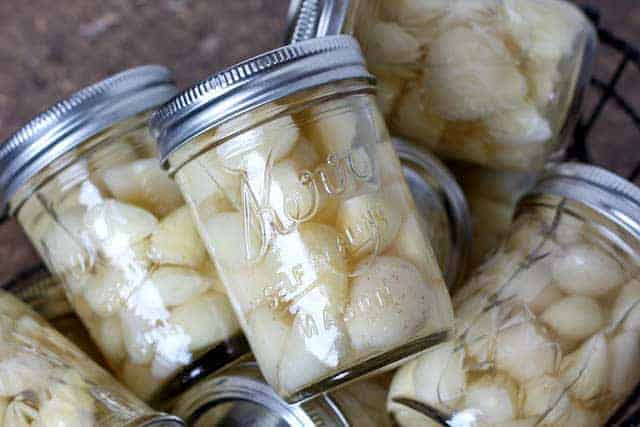
As it turns out, it is almost ridiculously simple. It’s so simple and so effective that I wish I had learned to do it a long time ago.
We all love having garlic ready to use now in the refrigerator and I’m excited to share my findings with you!
This garlic tastes FRESH. If you’ve ever bought a jar of minced garlic or peeled cloves in oil or vinegar, this doesn’t resemble any of those things. I have used the preserved cloves in a couple of recipes already and the taste is exactly the same as fresh.
How to Preserve Garlic
Raw, dried garlic can be kept for months in a cool and dark environment. However, here in the very warm southwest, it rarely lasts over a month in my home before it sprouts. Preserving it with this easy pickling method helps keep it fresh for months.
Wondering if this method yields garlic with a pickled, vinegary taste? It doesn’t. The natural oils of the garlic prevent the vinegar from being absorbed into the cloves! Handy, right?
To use your preserved garlic, just take out the number of cloves you need, rinse quickly with water, and use as desired. If you want a slight vinegar bite to the garlic, or if you are using it in a recipe that also calls for vinegar, simply use the garlic without rinsing.
Also called pickling garlic, this method is one of the most common ways to save your garlic harvest. At any given time, you’re likely to find a row of jarred garlic tucked in the back of my refrigerator.
Why Does Garlic Turn Blue
Updated 9/19/12 to answer multiple questions regarding, Why Did My Garlic Turn Blue? If your garlic does turn blue, it is still safe to eat.
This can happen when enzymes and amino acids present in garlic react with the sulfur compounds responsible for garlic’s pungent smell. I’ve seen this happen a few times over the years and apparently, it is fairly common.
Selecting Garlic
If you don’t grow and harvest your own garlic in a home garden, follow these tips for selecting the best and freshest heads of garlic from your farmer’s market or grocery store to use in your preserved garlic recipe:
First, look for heads of garlic without sprouting. Sprouting is an immediate indicator that the garlic is no longer fresh and not worth your money.
Next, give the garlic a quick “sniff and squeeze.” If it smells mildewy or moldy, give it a pass. That’s an almost sure indicator that the garlic has gone rotten.
Fresh garlic cloves should never be soft or squishy. A fresh head of garlic will be firm to the touch and not yield with a light squeeze.
How to Peel Garlic
Arguably the most time-consuming part of the process of preserving garlic is peeling it. Of course, you can just use your fingers and peel away but if you’re looking for a faster process, or run into a stubborn clove whose skin just won’t peel, here are a few popular tricks.
I’ve tried all of these methods and it really just depends on how much garlic you need to peel, how you plan to use it, or if you’re preserving it.
The method below requires just Two Metal Mixing Bowls and it is my favorite.
- Take your whole head of garlic and place it in a large metal bowl.
- Place another bowl the same size on top of the first bowl so that you have an orb shape.
- Shake the two bowls very hard for about 30 seconds.
Keep in mind that this method works best with older garlic where the skin is already a little loose. Vigorously shaking the garlic in the bowls allows the skins to just break and fall away from the cloves. This method works best when using large quantities of garlic to smash into each other and help the process along.
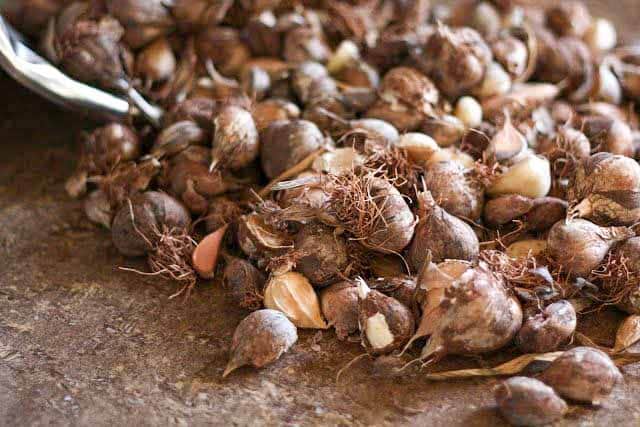
Likely the most well-known method of peeling garlic cloves in a flash is by hitting the clove with the flat side of the knife. This is handy when cooking, but for this recipe, we want to preserve whole cloves intact so be careful not to smash your garlic if you try this method.
Similar to the bowl method above, you can also place the garlic cloves in a glass jar with a closed lid and then vigorously shake to loosen the garlic skin. This is definitely effective but, the amount of garlic you’re able to process this way is limited.
You can also use the microwave or warm water to heat the garlic slightly, making it easier to peel with your fingers.
Preparing Garlic
Depending on when your garlic was harvested you might notice some brown spots on the cloves. This is perfectly normal and doesn’t mean your garlic is rotten.
After rinsing once, I used a small paring knife to trim off brown spots on my garlic cloves. After all the brown spots are removed, rinse the garlic bulbs a second time and proceed with the recipe as directed.
Storing Garlic
If you use the method outlined in the recipe, you’ll need to store your jars of preserved garlic in the refrigerator to make them last. Designate one side of a shelf or a shelf on the inside of a drawer for your garlic jars. They should stay fresh for several months and even up to a year.
Sticking with this basic refrigerator canning method is by far the easiest and more reliable way to preserve garlic.
While there are multiple sources online that claim pressure canning works, I’ve removed this information, based on a reader review that doing this destroyed her garlic. I stick with my recommendation of preserving garlic in vinegar in the refrigerator. According to the USDA, “Canning of garlic is not recommended. Garlic is a low-acid vegetable that requires a pressure canner to be properly processed. Garlic loses most of its flavor when heated in this way. For this reason, adequate processing times have not been determined for canning garlic.”
How to Use Preserved Garlic
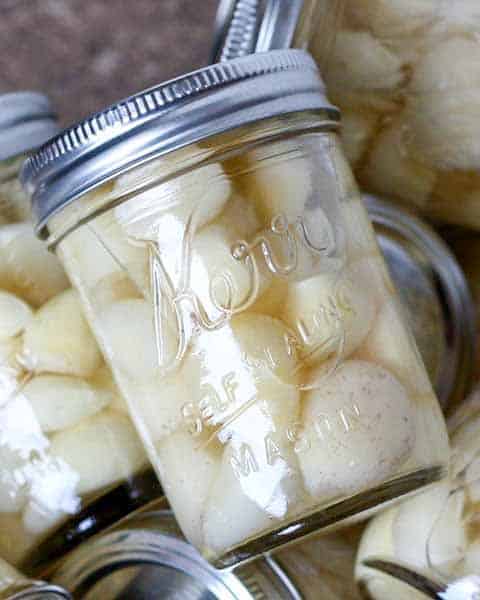
Now that you know how to preserve garlic, you can use that garlic anywhere you’d use the fresh stuff. And believe me when I tell you it maintains all the same aromatic, flavorful goodness of a freshly harvested garlic bulb.
Preserved garlic (rinsed and patted dry) is also amazing roasted! Use it in Roasted Garlic and Bacon Guacamole and be everyone’s new best friend.
I also love garlic as an ingredient in salad dressing, sauces, marinades and savory spreads. It’s just divine in Beer and Garlic Marinade, Mojo Marinade, and in Homemade Ranch Dressing. This Chipotle Garlic Sauce served with roasted fingerling potatoes are a garlic lovers’ dream.
True garlic fanatics NEED to try the Garlic Lover’s Potato Salad. That recipe alone is worth “putting up” a big batch of garlic so you have it on hand anytime a craving strikes.
Give preserving your own garlic a try. I guarantee you won’t be sorry! It’s an easy and money-saving way to ensure you always have garlic on-hand anytime you need it.
Kitchen Tip: I use this pot and these jars when preserving garlic.

Kitchen Tip: How To Preserve Garlic

Ingredients
- Garlic heads broken apart and cloves peeled
- Distilled vinegar
- Large pot for boiling the vinegar
- Jars for storing the garlic
Instructions
- Break apart your heads of garlic and peel the cloves. Place the peeled cloves of garlic in a large mixing bowl and fill with water. Use your fingertips to scrub any dirt off of the cloves. Once the cloves are cleaned, transfer them to a large strainer and rinse well.
- Depending on when your garlic was harvested, you might have very few brown spots on the cloves. My garlic was harvested late this year, so the ends were quite brown with some spots on the cloves as well. Use a small paring knife to trim the spots and then transfer the cleaned and trimmed cloves back to the strainer. Rinse again.
- Bring the vinegar to a boil in a large pot. For several hundred cloves of garlic, I used about 8 cups of vinegar. Place the clean garlic cloves into small jars. (I prefer to use small vs large jars to avoid contaminating a huge amount if the jar is open for too long in the refrigerator.) I filled 10 half pint jars with garlic. Once the vinegar has boiled, pour it over the garlic and screw the lids on tight.
- Let the jars come to room temperature on the counter overnight and then store in the refrigerator. This will keep in the refrigerator for up to a year. Enjoy!
Nutrition
Nutrition information is automatically calculated, so should only be used as an approximation.

{originally posted 9/14/12 – recipe notes and photos updated 5/10/22}




That is wonderfully useful information! Thanks so much. Can't wait to hear how it holds up. Have a lovely weekend Mary.
I have gone through the trouble of actually pickling and canning the garlic. I like this method much better!!
How easy is that! What an awesome, waste saving method. Thanks for sharing!
Brilliant! I never think about not having a cool, dry place. We're heading into cooler weather these days, so that wouldn't be an issue here.
What a fantastic idea!! I go through so much garlic, so all of those cans would be great to have on hand.
I had no idea you could do this…none of the preserved or frozen garlic I've had tasted good to me, so the fact that this tastes like fresh is fantastic. I'd love to have all those little peeled cloves of garlic ready to go.
That video may be the best cooking tip I've learned in a decade. Thanks for sharing.
First of all, congrats on a terrific garlic harvest—and thank you so much for this tip. I had no idea that you could preserve the cloves in this fashion. Fantastic.
I don't have a huge fridge so can I process these in a hot water bath?
When I was researching this, most people agreed that you can process in a hot water bath. However, the recommendation is to add the garlic to the boiling vinegar on the stove for a minute and then pour both the hot garlic and the vinegar into the jars. I honestly do not know why it is done that way, but many have done it with success. Good luck!
It is to bring the internal temp of the garlic up so you can can them safely I believe. Of course a lot of things are raw packed with hot liquid poured over them so I'm guessing either one would work but the processing time may be longer? Or take longer to get up to a boil? I pressure can mostly, not waterbath so I'm not as knowledgeable on that part lol. Thanks for an awesome new way to can garlic!
I'm so excited to have found your post! Never knew I could preserve garlic like this and can't wait to try it. I use a ton of garlic in my cooking and find it a pain to always peel the garlic. Can't wait to get a bunch canned and also can't wait to try this method for peeling garlic. My jaw dropped when I watched the video. Thanks so much for sharing.
Good one. I can't be without my garlic. Thanks
Oh my, thanks for the Garlic Video, amazing how all the papers come off the Garlic!
Terry Devine aka sunnywolfgar
How many minutes do you do the water bath, and do they turn to mush after the water bath?
The water bath doesn't affect the texture at all. They are in the water less than 5 minutes, or however long it takes me to rub the majority of the dirt off with my fingertips.
She's not talking about the cleaning, Mary. She's talking about a water bath canner, which shouldn't make it mushy, but wonder how long it needs to stay in canner?
So I followed the instructions as written, and for some reason…my garlic turned a greenish blue in some spots?! I have no idea how this happened! Did I just ruin a batch of garlic? :/ Have you encountered this before?
Updated link is above to answer multiple questions regarding why garlic turns blue. If your garlic does turn blue, it is still safe to eat.
Whoa! That is crazy haha. Good to know it's still good. Thanks!!
For shelf storage, how long would you process in a boiling water bath?
Ball Blue Book recommends 10-15 minutes and the USDA recommends 35 minutes. Just to be on the safe side, I'd probably process it for 35 minutes.
The processing is only to seal the lids on the jars, and that only takes about ten minutes. I've been canning for years and have never had a problem with only a 10-minute processing.
Processing does more than seal the jars. It kills off the bacteria that will make your food spoil. It is very important to process for the full amount of time recommended! You have been lucky so far.
proccessing tie is to kill bacteria. time of proccessing depends on the altitude of where you live , where i live in alberta i have to add 10 minutes to it to have things reach the required temperature or pressure than what someone at sea level would.its a physics thing. vinegar will pretty much pickle anything but i am sorry to say it does not garantee a full kill on the bacteria, you really do have to put all high acid foods, including pickles through the hot water bath canning procedure or risk giving someone disentry .
If you store your garlic in jars wrap them in foil or brown paper to keep the light out ,store in a cool dark cupboard.
Yeah, gotta love the 'peel garlic is less than 10 seconds video,' because I always have 2 huge metal bowls at my disposal!
No ordinary metal pot with lid in your kitchen, then?
Just put the head of garlic in a quart jar, put on the lid and shake vigorously. Peels as well (easier in my opinion) as the two bowl method.
i just peeled 1800 cloves..by hand. A true example of "hind sight is 20-20".
On the blue garlic thing–if I use garlic from the supermarket in my pickles, it almost always turns blue. If I use the garlic I get from my CSA, no blue. Do you think the freshness has anything to do with it?
And, thanks for this post. I never buy enough garlic from my CSA because it will sprout after about six months, no matter how I store it. This year, I'll use your method.
Blue garlic comes from the soil, it is the metals present that turn your garlic blue if copper and green if ferrous oxide, no problem to eating however…
I planted a huge harvest last fall and now I know what I'm going to do with it all. How exciting! Thank you.
This is awesome! The 10-second method to peel garlic over the top cool!
Thanks for sharing it. I shared your post on my facebook page.
Velva