This post may contain affiliate links. Please read our disclosure policy.
One of the most frequent cooking questions I answer is regarding safe meat cooking temperatures. Over the past ten years, the recommendation for pork cooking temp has changed and there’s been a bit of confusion. So, this is a great time to review – and to share one of our favorite pork roast recipes once more!
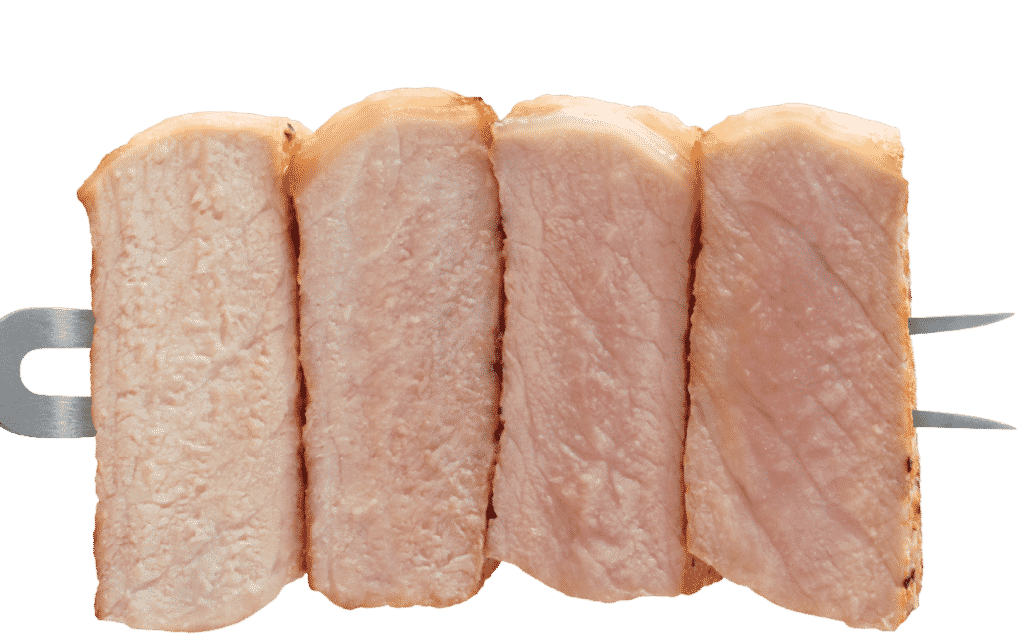
Pork Internal Temp
145°F with a 3-minute rest provides the optimal eating experience and is the minimum safe internal pork cooking temperature provided by USDA’s Food Safety and Inspection Service.
I can not encourage you enough to take the time to learn how to use a meat thermometer. (This is an easy-to-use digital thermometer at a great price.) Once you’ve tried cooking pork to medium-rare or medium, the difference in taste, texture, and flavor just might blow your mind.
Pork Cook Temp
The recommended cooking temperature for pork used to be 160°F; for every cut, for every single type of pork. Now, thanks to all of the biosecurity measures and the animal health issues that are of so much importance in the pork industry, we have healthier and safer pork to eat at lower temperatures.
This means that we can safely eat pork cooked to a juicy and never dried out 145°F. And THAT, my friends, is delicious pork.
Per The National Pork Board, the recommendation for cooking pork chops, pork roasts, and tenderloin is an internal pork temp of 145° F, followed by a three-minute rest.
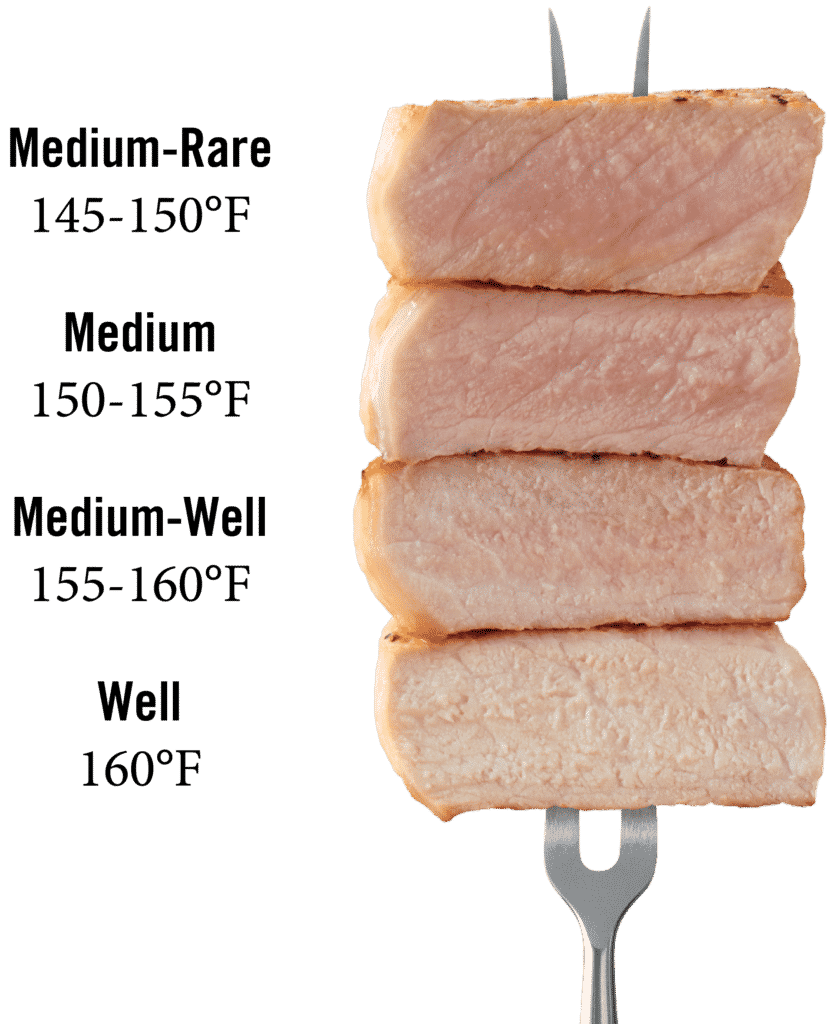
Ground pork should always be cooked to 160° F. Doneness for some pork cuts, such as small cuts that are difficult to test with a thermometer or large cuts that cook slowly at low temperatures, is designated as “tender.” Pre-cooked ham can be reheated to 140° F or even enjoyed cold, while fresh ham should be cooked to 145° F.
Adhering to these pork cooking temperature guidelines will result in an optimum eating experience of enhanced flavor and safety. The National Pork Board follows the guidance of the U.S. Department of Agriculture (USDA).
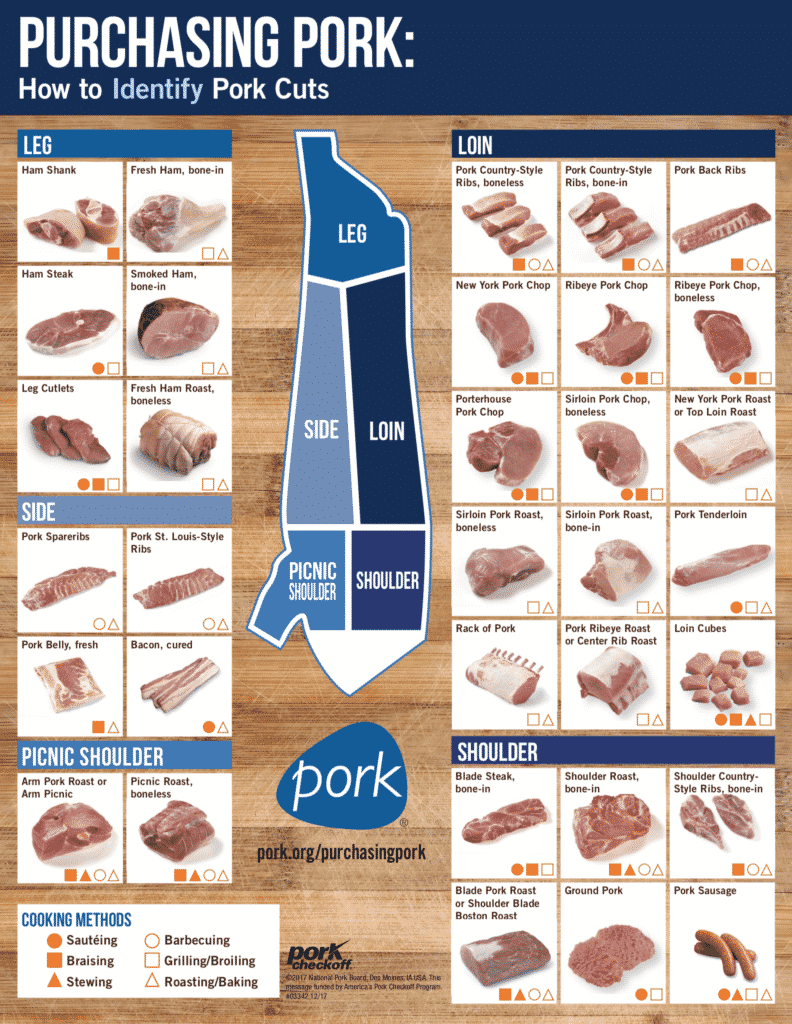
How to Choose Pork in the Grocery Store
Here are a few pork-buying tips for you. Remember three little words when you’re in the grocery store, “redder is better.” Look for meats that are red, firm, and without excess liquids in the package.
If there are a lot of juices from the meat in the package, that is literally flavor that is no longer in the meat. If the pork is pale with a lot of liquids in the package, that’s not the optimal pork you’ll want to purchase.
By nature, pork shoulder roasts are redder. There’s already a good amount of fat in pork roasts. (Don’t panic, fat is good and it means that the meat will have lots of flavor.) However, when shopping for a pork shoulder, picnic, or butt roast, you want to look for less fat, simply because the fat dissolves as it cooks and the final yield will go down.
One final note: Pork shoulder roast = a picnic roast + a butt roast. A “butt” roast is not from the butt of the pig. Pork shoulders and pork butts used to be shipped, packed in salt, in a barrel called a butt. Regardless of the name, all three roasts are cooked the same way. I typically just buy whichever one is on sale.

Herb Rubbed Sirloin Tip Pork Roast

Ingredients
- 1.5 – 2 pound pork sirloin tip roast
- 1¼ tablespoons smoked paprika
- ½ teaspoon cayenne pepper
- ½ teaspoon freshly ground black pepper
- 1 teaspoon garlic powder
- ½ teaspoon onion powder
- ½ teaspoon dried oregano
- ½ teaspoon dried thyme
- 1-2 teaspoons kosher salt adjust to your preference
- 2 tablespoons olive oil
Instructions
- Preheat the oven to 350°F. Combine all the spices in a small bowl. Add the olive oil and whisk or stir well to combine. Allow this mixture to rest for 15 minutes. It will thicken to a paste-like consistency.
- Line a small baking sheet with foil and place a wire rack over it. Rinse the roast and pat dry. Rub the spice mixture all over the roast, completely covering all sides with spices.
- Roast for 60-90 minutes. Remove from the oven when the meat reaches an internal temperature of 145 degrees. Let the roast rest 15 minutes before slicing.
Notes
Nutrition
Nutrition information is automatically calculated, so should only be used as an approximation.

{originally published 10/3/18 – notes and photos updated 12/2/24}
If you have any questions or would like to learn more about pig farming in general, you can find out more at Pork.org.
Disclosure: I’ve partnered with National Pork Board to share this information with you. The graphics shared are courtesy of pork.org. Pig photo by @sowmomma. As always, all thoughts and opinions are my own.
Farm visit notes originally published 10/3/18
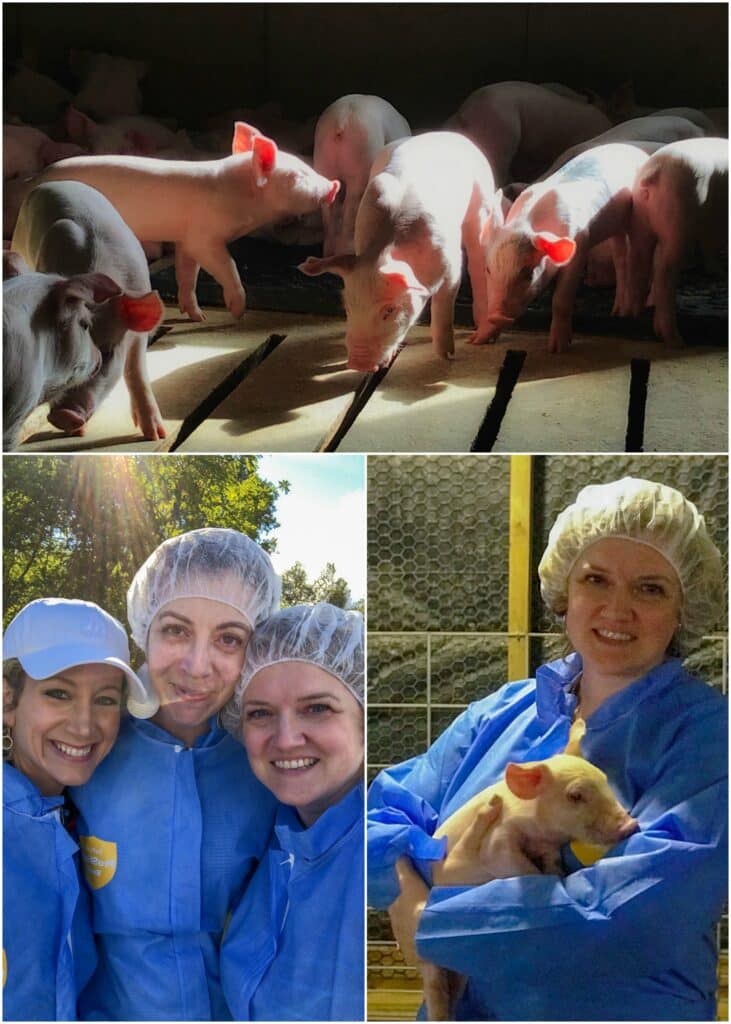
Ever wonder why “bunny suits” are used when someone is working with pigs? I talked a little bit last year about the biosecurity and safety measures used when we visited the farms.; even going so far as to shower from head to toe when entering and exiting the facilities.
Before I visited the pigs on the farm and saw the day-to-day work that goes into maintaining their environments, I was relatively clueless. Biosecurity is just a fancy word for “keeping pigs from getting sick.”
The cleanliness of the barns and stalls also helps minimize the risk of disease and illness. That concrete floor you see is key to preventing a lot of the illnesses that used to occur with pig farming. As it turns out, concrete trumps dirt in a huge way when it comes to preventing the spread of germs.
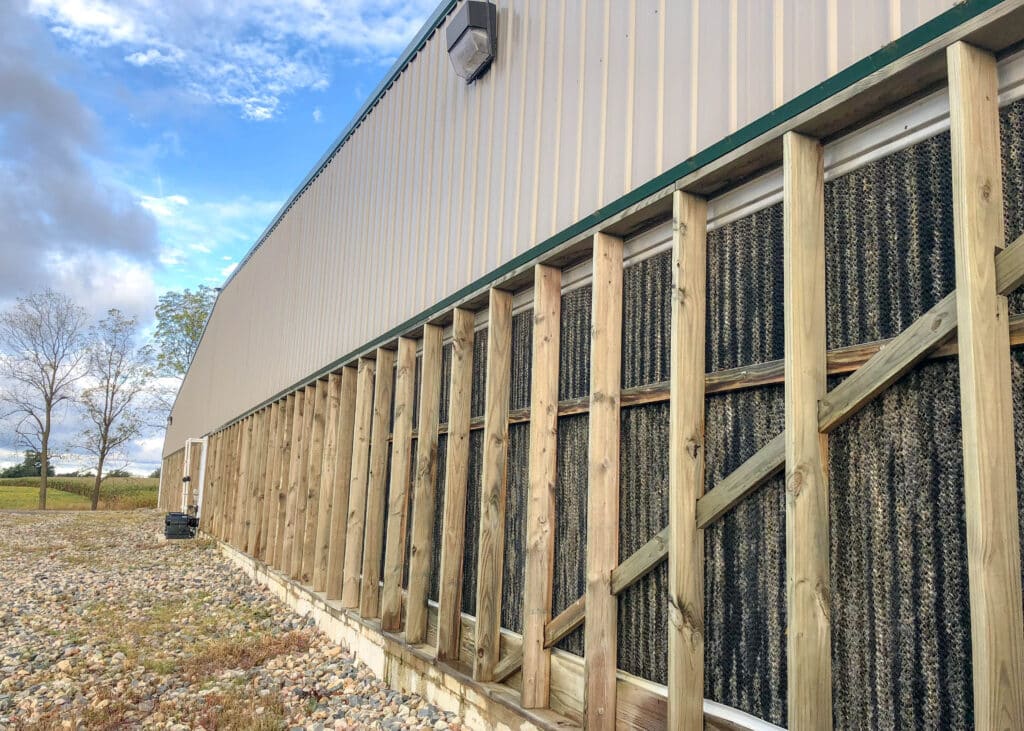
The filtering systems pictured below all contribute to the biosecurity of pig farming today. This keeps the pigs healthier. It helps prevent disease and having to treat pigs with medicines. The cool water filtration system on the wall of the barn below both purifies the air going into the barns and also cools the air inside the facilities.

Filtering, vaccines, and antibiotics all improve the quality of life for the pigs. No one ever jumps to give medicine to an animal, but if it needs to be done, it is administered. If an animal does need to be given an antibiotic, it’s tracked and closely documented.
If any meat is tested by the USDA at the processing plant with ANY residue of medicine it is flagged and the meat is discarded. If a farm is flagged a second time, they are no longer allowed to process their animals.
So, there is literally no way for antibiotics to be present in the meats that we purchase at the grocery store.
Safe Temp for Pork
The end result of all of these safety measures has helped make today’s lower temp cooking methods safe and also improved the pork’s taste in the end as well. Just about any pork purchased from a major store today that has been industrially processed is safe to cook to 145°F.
145°F with a 3-minute rest provides the optimal eating experience and is the minimum safe internal temp for pork provided by USDA’s Food Safety and Inspection Service.
Please note that there is a caveat for that cooking temp. If the meat you’re buying is “enhanced” or “seasoned,” it has likely been injected with flavors or seasonings.
There’s nothing wrong or dangerous about injecting the meat with flavors, but you’ll want to cook it to a higher temperature to err on the safe side since you’re no longer working with a pure cut of meat.



This would be VERY helpful when I am smoking meat! I just always hope that it’s done when it’s supposed to be! I would love it!
my hubby makes the BEST baby back pork ribs – slow smokes them then wraps them in foil to finish them off. Falling off the bone fabulous!!
Baked or grilled with a jezebel sauce on the side !!
We love grilled pork
Thank you for this article. I used to love pork, but lately it is dry and tough. I am anxious to try it again after reading this article.
What my husband and I did with this recipe was double the sauce. We love to have our sauce cover the meat totally.
Side note we just love both of your recipe books. Every night we are cooking something new and so far we love everything. I have never had a recipe book that I was happy with until now. I am telling everyone to buy it you will not be disappointed.
Cheryl, that is awesome to hear! I’m thrilled that you’re enjoying the cookbook. Thanks for taking the time to tell me.
I have a pretty good marinate for our pork chops. The ingredients are mint, light (lite) soy sauce, lemon pepper seasoning, garlic, water, vegetable oil, and about 6 boneless pork chops. (I would be glad to give exact amounts that I use, but I did get this from someone else! But it works extremely well. I put chops and marinate in a large “storage baggie” and it holds well.) I try to let my chops marinate for at least an hour or a little more. I grill them on a grill using charcoal briquettes and the chops are absolutely delicious. Eat well!
We love pork so many ways. One of our favorite recipes this time of year is “Pork Chops with Sauteed Apples and Applejack Cream”
Ah, your Pan Fried Pork Medallions with Creamy Wine Sauce is just the ticket for dinner tonight. I’ll use my sirloin chops though as they are my fave.
looks like an easy recipe
I make pork tenderloin with slices cut into the meat then placing slices of garlic in the cuts. A little olive oil and balsamic vinegar then some Montreal steak seasoning on top. Yum!
I never knew we could eat pork rare! I use a meat thermometer to make sure its done, but we’ve always eaten it well done! I just bought pork tenderloins for the weekend; here’s our chance to try this recipe.
Cheers!
We do love our pork! Pork chops are a favorite fried up nice and crispy. But, my mom made a delicious pork and rice casserole in the oven and I wish I could duplicate it!!
I make various cuts of pork, from a roast to ribs with a plum sauce for basting and saving some for drizzling once plated. It’s made from canned plums, lemonade concentrate, spices and so on. It’s delicious!!
My favorite pork dinner is a loin roast with pan roasted potatoes, gravy from a roux of pan juices and a nice green vegetable such as asparagus. I salt and pepper the roast and, with toothpicks, cover the top with thick onions slices. Oh…the aroma while roasting. If there are leftovers, I make a “pork mess”. Leftover roast and potato cut into bitesize pieces, simmered in gravy, onion, garlic, sliced mushrooms and noodles. There is rarely any roast potato leftover so the noodles are a welcome addition to the “mess”.
Thanks for sharing the type of wine you use, “red” or “white” does not help at all!!
This was most informative! I love a thick pork chop cooked in slow cooker with applesauce and brown sugar.
I learned this quick way to cook pork chops from Irene, a family dear friend. Usually I buy not very thick cuts of boneless or bone in meat. Slit the fat edges of the chops so they won’t curl up. Season both sides of pork chops with garlic and lemon pepper seasoning -pat seasoning into meat. Put in dry pan at medium heat until browned but not cooked thoroughly while moving it around every 30 seconds so it won’t stick. Lift meat up with fork and add underneath add to pan Worchestershire Sauce. Turn it over. Heat the uncooked side in the sauce. Move in pan so it does not stick and cook 4 to 5 minutes. Lift it up and add the sauce to pan. Then turn chop over again so first cooked side is now in the sauce. Let it cook 2 minutes in the sauce moving it in pan every 30 seconds so it won’t stick. Serve.
My family likes a simply roasted pork roast seasoned with Greek seasoning suspended on a rack with a flavorful liquid in the bottom of the roaster, quite often beer. I roast uncovered for 30 minutes, then covered for 1 1/2 hour at a temperature of 350 degrees.
I grew up eating pork at least once a week. My favorite way to eat pork is any way at all! I guess you could call me a “pork-aholic”. Pork is so delicious roasted, in the slow cooker, braised, fried, stuffed; just any way at all. The flavors are like nothing else if cooked properly and seasoned correctly. My all time favorite is grilled after marinating with a combination of: EVOO, garlic, honey, balsamic vinegar and Dijon mustard. OHH………………..So Yummy !!!